Institutional ERP Solutions for Efficient Administration
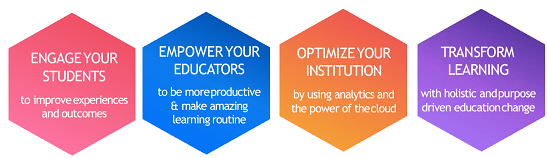
Our administration service is designed to provide efficient and organized support to businesses of all sizes. With a team of highly skilled professionals, we handle a wide range of administrative tasks, allowing business owners and managers to focus on their core operations. From managing calendars and scheduling appointments to handling correspondence and preparing reports, our administration service ensures that all administrative duties are carried out with the utmost professionalism and attention to detail. Our team is well-versed in various software and tools commonly used in administrative tasks, ensuring that we can seamlessly integrate with your existing systems and workflows. We understand the importance of confidentiality and data security, and we take every measure to protect your sensitive information. Whether you need assistance with document management, travel arrangements, or general office support, our administration service is here to streamline your operations and provide you with the peace of mind that your administrative tasks are being handled efficiently and effectively. Trust us to handle the administrative side of your business, so you can focus on what you do best.

Key Features

  • based access
  • A complete bird’s eye view
  • Auditable Transactions for transparency .
  • Complete Blueprint of branch can be tracked
  • Inventory Management
  • USID(Unique Student Identification)
  • LMS Integration
  • monitoring the E – Service book to staff like attendance, performance, marks & grades for students
  • QR CODE generated answer sheets from USID for each student
  • Cloud storage for every student for lifelong
  • Health – Monitoring of Periodic Vaccinations for Students according to age & alerts to parents
  • Support service and call center facility available 24 / 7
  • Geo tracking authentication for attendance and end to end tracking
  • Real time monitoring & reporting system
  • Micro management of Hostel
  • Track dropout sensus with 100% accuracy
  • Complete control of KT transfer to meet employee

Core Modules

  • Student  Lifecycle Management
  • Staff Management
  • Examination Management
  • Inventory Management
  • HRMS & Payroll Management
  • Leave Management
  • Library Management
  • Tutor Management
  • Campus Geo Fencing  & Mapping
  • Student, Parents & Staff Communication Management
  • Reports & MIS Generation
  • Events
  • Catering/ Meal Management
  • Front Office/ Visitor Management
  • Parent/Student Mobile App & Parent/ Student Web Portal
  • Teacher Mobile App and Teacher Web Portal
  • Transport/ Fleet Management
  • Library Management
  • Hostel Management

MLOps

MLOps (Machine Learning Operations) is the practice of automating and managing the end-to-end machine learning lifecycle, from model development to deployment and monitoring. It bridges the gap between data science and operations, ensuring scalable, reliable, and repeatable ML workflows. Key technologies include MLflow, Kubeflow, TensorFlow Extended (TFX), Docker, Kubernetes, and Git for version control and CI/CD integration. MLOps helps organizations maintain model performance, improve collaboration, and accelerate the delivery of AI-driven solutions.

Cybersecurity

Cybersecurity focuses on protecting computer systems, networks, and data from unauthorized access, attacks, and damage. It involves practices like network security, encryption, threat detection, and incident response to safeguard digital assets. Key technologies include firewalls, antivirus software, SIEM tools like Splunk and IBM QRadar, and security frameworks such as NIST and ISO 27001. Cybersecurity professionals also use ethical hacking, penetration testing, and cloud security tools to identify vulnerabilities and ensure data integrity across digital environments.

Generative AI

Generative AI is a branch of artificial intelligence that creates new content such as text, images, audio, or code by learning patterns from existing data. It uses advanced models like Generative Adversarial Networks (GANs), Transformers, and Large Language Models (LLMs) such as GPT and BERT. Key technologies include Python, TensorFlow, PyTorch, and Hugging Face for model development and deployment. Generative AI powers applications like chatbots, content creation, image generation, and virtual assistants, transforming creativity and automation across industries.

.NET Full Stack

.NET Full Stack Development involves building complete web applications using Microsoft’s .NET framework for both front-end and back-end development. The back-end is powered by C#, ASP.NET Core, and Entity Framework, while the front-end often uses HTML, CSS, JavaScript, and frameworks like Angular, React, or Blazor. Developers work with databases such as SQL Server or MySQL, and use tools like Visual Studio, Git, and Azure DevOps for coding, version control, and deployment. This stack enables secure, scalable, and high-performance web application development.

Salesforce Admin + Dev

Salesforce Admin + Developer roles focus on managing, customizing, and extending Salesforce’s CRM platform to meet business needs. A Salesforce Admin handles configuration, automation, and user management using tools like Process Builder, Flow, and Lightning App Builder, while a Salesforce Developer builds custom applications and logic using Apex, Visualforce, Lightning Web Components (LWC), and SOQL. Together, they leverage Salesforce Cloud platforms such as Sales Cloud, Service Cloud, and Marketing Cloud to streamline business processes and enhance customer relationship management.

Power BI

Power BI is a business intelligence and data visualization tool by Microsoft that helps transform raw data into interactive and insightful dashboards. It connects to various data sources like Excel, SQL Server, Azure, and Google Analytics, allowing users to analyze and visualize data easily. Power BI uses DAX (Data Analysis Expressions) and Power Query (M language) for data modeling and transformation. It integrates with Microsoft Power Platform, Azure Machine Learning, and SharePoint, making it a powerful tool for real-time analytics and data-driven decision-making.

Python Full Stack

Python Full Stack Development involves building both the front-end and back-end of web applications using Python as the core language. It includes frameworks like Django and Flask for backend development, along with HTML, CSS, JavaScript, and libraries like React or Angular for the frontend. Developers use databases such as MySQL, PostgreSQL, or MongoDB, and tools like Git, Docker, and REST APIs for deployment and integration. Python Full Stack enables end-to-end web solutions, from user interface to server-side logic and data management.

Data Science

Data Science is the field that combines statistics, programming, and domain knowledge to extract meaningful insights from large volumes of data. It involves data collection, cleaning, analysis, and modeling to support decision-making and predictions. Key technologies include Python, R, SQL, TensorFlow, PyTorch, Pandas, NumPy, and visualization tools like Tableau and Power BI. Data Science also integrates machine learning, big data tools such as Hadoop and Spark, and cloud platforms like AWS, Azure, and Google Cloud for scalable analytics.

AI & Machine Learning

AI (Artificial Intelligence) and Machine Learning (ML) involve creating systems that can learn, reason, and make decisions without explicit programming. AI focuses on simulating human intelligence, while ML uses algorithms and data to improve performance over time. Common technologies include Python, TensorFlow, PyTorch, Scikit-learn, and Keras for model development, along with NLP, computer vision, and deep learning techniques for real-world applications like speech recognition, recommendation systems, and predictive analytics.

Sapling Enterprise
Privacy Overview

This website uses cookies so that we can provide you with the best user experience possible. Cookie information is stored in your browser and performs functions such as recognising you when you return to our website and helping our team to understand which sections of the website you find most interesting and useful.